Introduction
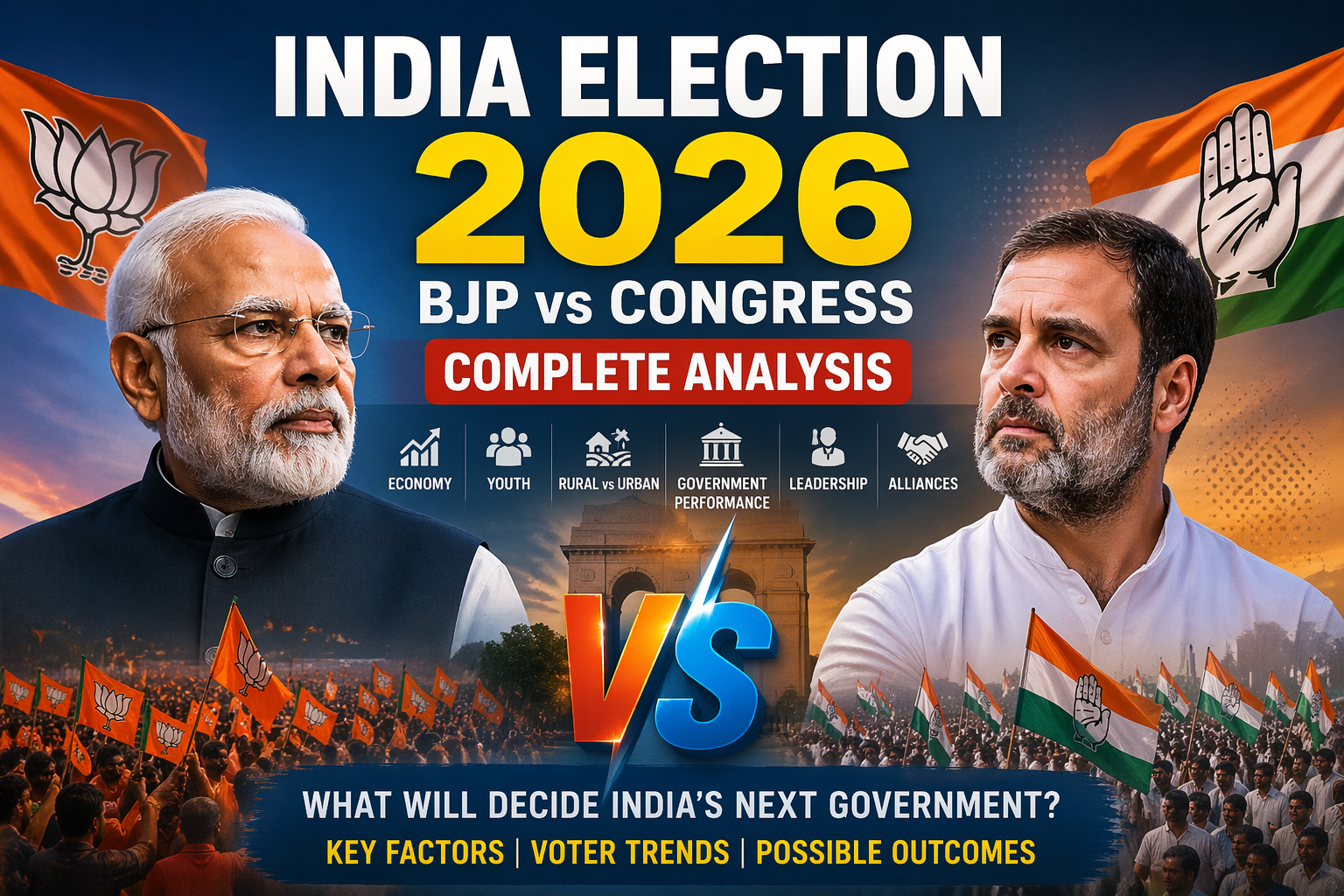
The India General Election 2026 is expected to be one of the most significant political events in the country. Various political parties will compete to form the central government. This analysis focuses on understanding general political trends, voter behavior, and key influencing factors without predicting any final outcome.
Party Comparison
BJP
Strengths:
- Strong national leadership structure
- Wide organizational reach
- Focus on development policies
Weaknesses:
- Anti-incumbency in some regions
- Regional dissatisfaction in certain states
Public Perception:
- Seen as development-oriented party
Congress
Strengths:
- Long political history and experience
- Strong presence in some states
Weaknesses:
- Leadership stability challenges
- Weaker national-level coordination
Public Perception:
- Seen as traditional opposition party
Voting Factors
Economy & Jobs
Employment opportunities and economic growth strongly influence voter decisions.
Youth & Social Media
Young voters and digital campaigns play a major role in shaping opinions.
Rural vs Urban
Different priorities exist between rural development and urban infrastructure.
Government Performance
Past performance and policy outcomes affect voter trust.
Leadership Image
Public perception of leaders impacts voter confidence.
Alliances
Coalitions with regional parties can change election dynamics.
Voting Behavior Analysis
Voters may choose parties based on multiple factors such as development promises, local issues, leadership trust, and economic conditions. Support or opposition to any party depends on regional variations and public sentiment at the time of election.
Conclusion
Election outcomes cannot be predicted in advance as they depend on complex and changing public moods, performance records, and political strategies. The 2026 election will be shaped by many social, economic, and political factors across India.




Leave a Comment
No comments yet. Be the first to share your thoughts!