Introduction
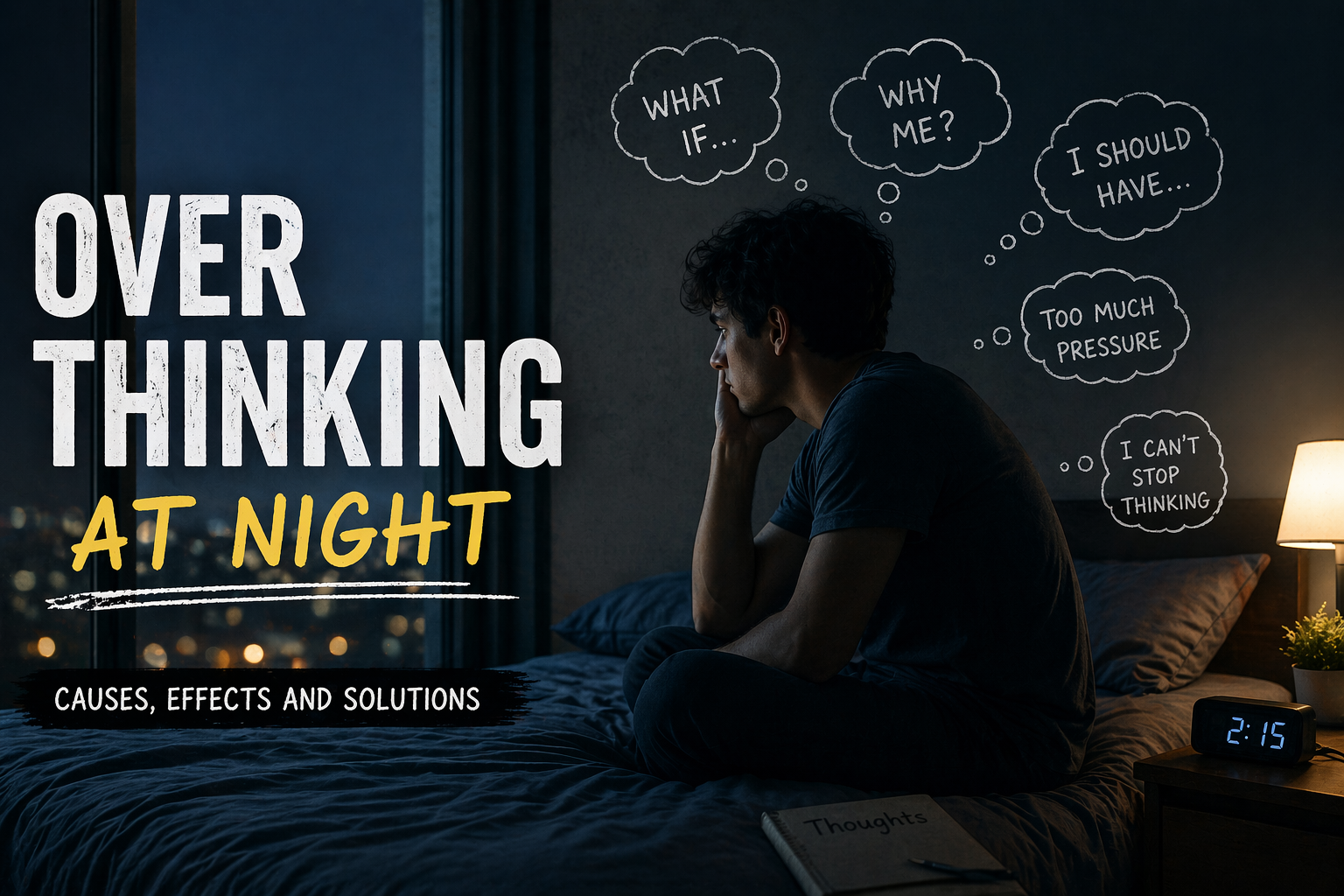
It usually starts quietly. You lie down, close your eyes, and expect sleep to come naturally. But instead of rest, your mind begins to wake up. Thoughts slowly appear — one after another — until your mind feels louder than the world around you.
During the day, everything feels manageable. You stay busy, distracted, surrounded by noise. But at night, when everything becomes still, your thoughts finally find space to speak.
Why Overthinking Happens at Night
At night, distractions disappear. There are no notifications, no conversations, no responsibilities demanding your attention. And in that silence, your mind finally slows down enough to notice everything you’ve been avoiding.
It’s not that your thoughts suddenly appear at night. They were always there — just hidden under the noise of the day.
The Psychology Behind It
Your brain is always processing emotions, even when you’re not aware of it. During the day, it prioritizes tasks and responsibilities. But at night, when everything calms down, your brain shifts its focus inward.
This is when unresolved emotions, doubts, and questions come forward. The mind tries to make sense of things — conversations, decisions, regrets — everything that didn’t get processed earlier.
Common Thoughts at Night
You start replaying conversations. Thinking about what you should have said. Wondering about the future. Questioning your decisions. Doubting yourself.
Sometimes, even small things feel heavy at night. A simple mistake feels bigger. A small worry turns into a long chain of thoughts.
Real-Life Situations
Imagine someone lying awake, thinking about their career, their relationships, their future. During the day, they manage everything fine. But at night, the same thoughts feel overwhelming.
Or someone replaying a conversation, wishing they had responded differently. It’s not about the moment itself — it’s about how the mind keeps holding onto it.
A Personal Reflection
I’ve had nights where my mind refused to stay quiet. Thoughts kept repeating, one after another, making it impossible to rest.
At first, I thought something was wrong. But slowly, I realized — my mind wasn’t trying to disturb me. It was trying to process things I had ignored.
And once I started understanding that, those nights felt less overwhelming.
Conclusion
Overthinking at night is not a weakness. It’s a sign that your mind is active, aware, and trying to understand your life.
But not every thought needs an answer. Not every question needs to be solved immediately.
Sometimes, the best thing you can do is let the thoughts pass — without holding onto them.
Because peace doesn’t come from controlling your thoughts. It comes from learning not to follow every single one of them.






Leave a Comment
No comments yet. Be the first to share your thoughts!