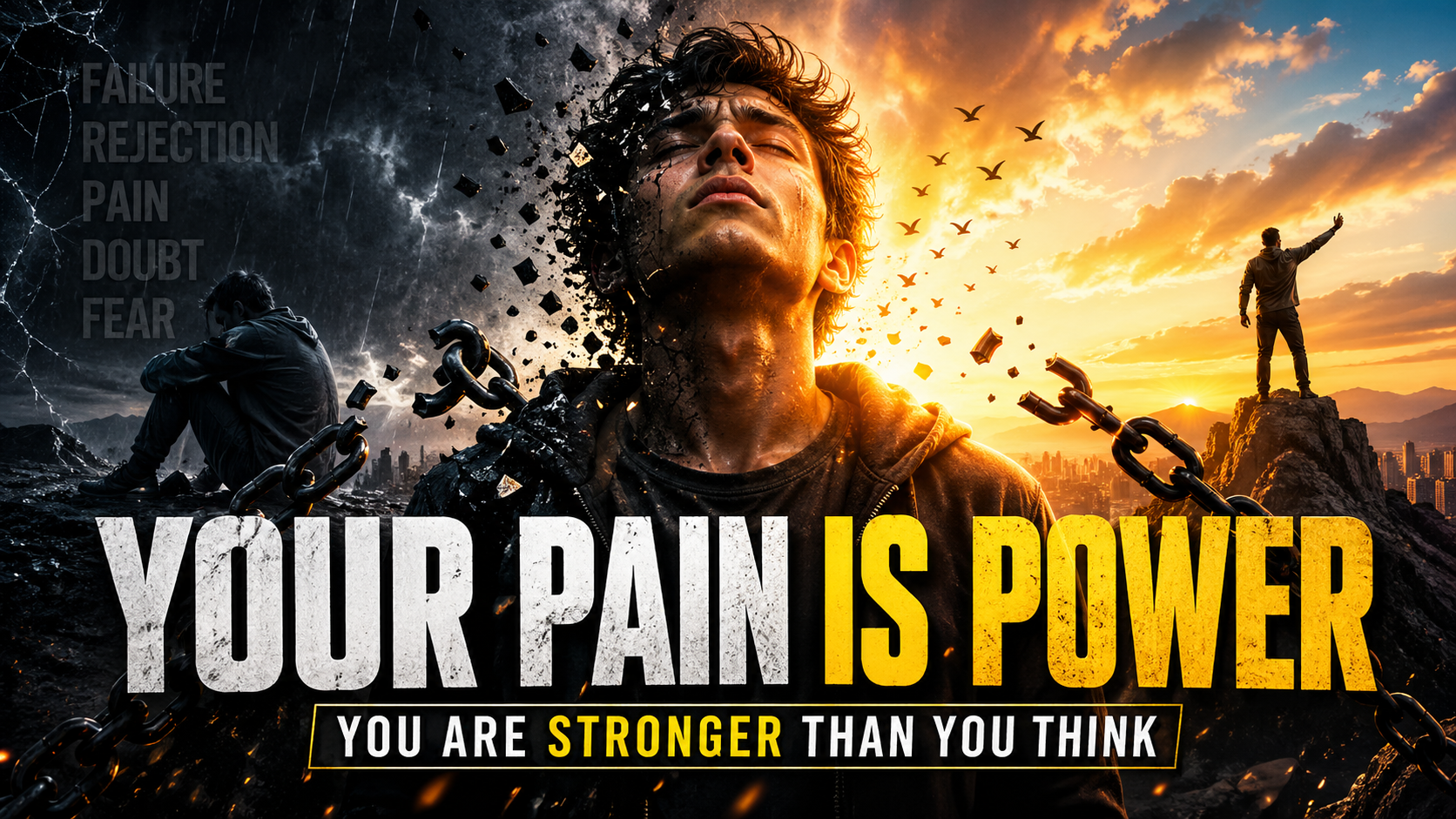
You Are Stronger Than You Think
Powerful Introduction
There is a voice inside your head that wakes up before you do. It whispers things like: "You can't handle this. You're not ready. Everyone else is succeeding—why are you still stuck? Look at what you lost. Look at who left. Look at how far you've fallen."
And on the hard mornings—the heartbroken mornings, the mornings when the alarm feels like an insult—you believe that voice. You let it settle into your bones. You let it become the soundtrack of your day before you've even brushed your teeth.
I need you to understand something right now, before you read another sentence: That voice is lying to you.
Not exaggerating. Not being dramatic. Flat-out lying through its teeth.
Because here is the truth that millions of people have discovered in their darkest hours — the truth that has been proven in concentration camps, in hospital beds, in bankruptcy courts, in divorce hearings, in the wreckage of dreams that burned to the ground: you are stronger than you think.
Not someday. Not after you fix everything. Not when life gets easier. Not when the pain stops. Not when you lose ten pounds or get the promotion or find the right partner.
Right now. In this exact moment. With the weight you're carrying across your shoulders. With the wound that won't close no matter how many times you've tried to bandage it. With the fear that crawls into bed with you every night and keeps you awake until 3 AM.
You are carrying more than you ever thought possible. And you're still here. That's not weakness. That's not luck. That's not coincidence.
That is living, breathing, undeniable proof of your strength.
This blog post is not going to give you empty platitudes. It's not going to tell you to "just think positive" or "look on the bright side." Because you and I both know that when you're drowning, someone telling you to smile is insulting.
Instead, I'm going to show you the evidence — the science, the stories, the strategies — that prove beyond any doubt that you possess reserves of strength you haven't even touched yet. And by the time you finish reading, you're not going to believe you're stronger.
You're going to know it.
Why You Are Stronger Than You Realize
Let me tell you something strange about the human mind that most people never realize.
We are wired to remember our failures more vividly than our victories. Psychologists call this negativity bias, and it's not a flaw — it's an ancient survival mechanism. Our ancestors needed to remember where the tiger almost ate them more than they needed to remember the beautiful sunset. The tiger was relevant to survival. The sunset wasn't.
But here's what happens in modern life:
You survive something brutal — a breakup, a bankruptcy, a betrayal, a breakdown, a diagnosis, a disaster. You get through it. You keep going. You put one foot in front of the other even though every cell in your body is screaming at you to curl up and disappear.
And then, weeks or months later, your brain does something incredibly cruel: it minimizes what you just survived.
"That wasn't that hard. Anyone could have done that. You almost broke, remember? You cried for weeks. You couldn't get out of bed for three days. You're not strong — you just had no choice. You just didn't die. That's not an achievement."
Do you see what's happening here?
Your own mind is gaslighting you about your own resilience.
It's erasing your victories. It's minimizing your survival. It's telling you that climbing Mount Everest doesn't count because you stopped to catch your breath a few times.
The truth is that strength doesn't look like what Hollywood sold us. It doesn't roar. It doesn't punch walls. It doesn't give speeches on mountaintops while dramatic music plays.
Real strength — the kind that actually matters, the kind that gets you through real life — looks completely different. Real strength looks like:
- Waking up on a Tuesday morning when you didn't want to exist anymore, and making coffee anyway
- Making dinner for your kids while your heart is shattered into a thousand pieces because the person you loved just walked out
- Showing up to work when you feel like a ghost — when you feel invisible, worthless, and completely disconnected from everyone around you
- Trying one more time after fifty rejections, even though the last fifty "nos" are still ringing in your ears
- Breathing through the panic attack until it passes, counting seconds, telling yourself it will end even though your body is convinced you're dying
- Choosing hope when every single cell in your body wants to surrender, to give up, to just let go and stop fighting
- Sitting with someone else's pain even when you're drowning in your own
- Asking for help when every instinct tells you to isolate and disappear
- Forgiving someone who doesn't deserve it, not because they've earned it, but because you deserve peace
That is strength. That is the actual, real, everyday heroism of human survival. And you have done versions of all of these things. Maybe not today. Maybe not this week. But somewhere in your story — somewhere in the chapters you don't talk about at dinner parties — you proved that you are stronger than the circumstances that tried to bury you.
The problem isn't that you lack strength. The problem is that you've forgotten how to see it. You've been looking for a lion when you should have been looking for someone who simply refused to stop breathing.
How Pain Builds Inner Strength
Most people think pain is purely destructive. A problem to be avoided at all costs. An enemy to be escaped, numbed, medicated, or distracted away.
But here's what the strongest people on earth have learned through fire: pain is a feedback loop, not a final destination.
Let me explain this more deeply, because this single insight might change everything for you.
Every time you experience discomfort — emotional, physical, psychological, spiritual — your mind has a fundamental choice. It can interpret that discomfort as damage or as data.
When you see pain as damage, you collapse. You spiral. You believe something is permanently wrong with you. You start catastrophizing: "This pain means I'm broken. This pain means I'll never be okay. This pain means my life is over."
When you see pain as data, something miraculous happens. You don't enjoy it — let's be clear, pain still hurts. But instead of drowning in it, you ask different questions. Questions like: "What is this pain trying to teach me? Where is it pointing? What needs to change in my life? What am I avoiding? What truth am I not willing to face?"
This isn't toxic positivity. I'm not telling you to "just be happy" or "look for the silver lining." When you're in the middle of suffering, someone telling you to be positive is like someone handing you a umbrella in a hurricane — insultingly useless.
What I am telling you is that there is a difference between pain with meaning and pain without meaning. And you have the power to assign meaning to your pain. Not because it's easy. Because it's the only path through.
Let's look at the science. Researchers have extensively studied something called post-traumatic growth. Not resilience — bouncing back to where you were before. Growth — becoming genuinely stronger, wiser, and more capable than you were before the trauma.
Here's what the data shows: approximately 50% to 70% of trauma survivors report significant positive psychological growth from their most painful experiences. Not despite the pain — because of it.
These survivors develop:
- Deeper, more authentic relationships — because they stopped wasting time on shallow connections
- Greater appreciation for life — because they know how fragile it is
- Enhanced spiritual or philosophical understanding — because they were forced to ask the big questions
- Increased personal strength — because they discovered they could survive what they never thought possible
- New possibilities and life paths — because the old ones burned down and they had to build something new
Your pain is not pointless. It is painful — excruciating, exhausting, unfair — but it is not pointless.
The person you are becoming is being forged in the fire you're walking through right now. And the version of you on the other side — the version that makes it through this — that version has calluses on their soul. That version knows things the comfortable version never could. That version has seen the abyss and walked away. That version is dangerous to fear, to doubt, to mediocrity, to anyone who tries to tell them they're not enough.
You aren't being destroyed. You're being upgraded. It doesn't feel like an upgrade right now — I know. Diamonds don't feel like diamonds when they're being crushed under impossible pressure. But pressure is the only thing that creates them.
Overcoming Fear and Failure
Let's talk about fear — not as an abstract concept, but as the visceral, throat-tightening, stomach-dropping reality that keeps you stuck.
Fear is not your enemy. This is going to sound crazy, but stay with me. Fear is your compass. Fear always points directly at the thing you most need to face.
Think about it. You're not afraid of things that don't matter. You're afraid of things that matter enormously. You're afraid of rejection because connection matters. You're afraid of failure because success matters. You're afraid of loss because love matters. You're afraid of looking foolish because your dignity matters.
The presence of fear is not evidence that you should run away. The presence of fear is evidence that you're standing at the edge of something significant.
Every single person you admire — every entrepreneur, every artist, every athlete, every leader, every human being who has ever done anything worth remembering — has been terrified. Not once. Not occasionally. Constantly.
The difference between people who succeed and people who stay stuck is not the absence of fear. The difference is what they do while they're afraid.
Let me tell you about failure, too, because we have completely misunderstood what failure is.
Failure is not the opposite of success. Failure is not your enemy. Failure is not evidence that you're not good enough.
Failure is tuition. It's the price you pay for the education that success requires. And like all education, you don't get to skip the hard classes.
Think about every success story you've ever admired. Every single one includes failure — often spectacular, humiliating, public failure. Not despite failure — because of it.
- The entrepreneur who went bankrupt three times before building an empire? Those bankruptcies taught lessons no business school could.
- The athlete who was cut from the team before becoming a champion? That rejection forged a work ethic that talent alone never could.
- The artist who was rejected hundreds of times before their work was celebrated? Those rejections built a resilience that made success feel earned, not accidental.
- The scientist who failed a thousand times before inventing the light bulb? "I have not failed," he said. "I've just found 10,000 ways that won't work."
Failure is not the opposite of success. Failure is the path to success. The only people who never fail are the people who never try anything worthwhile. And those people — the ones who play it safe, who stay small, who never risk — they don't succeed either. They just quietly disappear, wondering what might have been.
Here is what you need to remember when failure comes — and it will come:
- Don't fear falling. Fear staying down.
- Don't fear losing. Fear never trying.
- Don't fear being wrong. Fear never learning.
- Don't fear rejection. Fear living a life where you never risked being seen.
- Don't fear making mistakes. Fear making the same mistake for twenty years because you were too afraid to change.
Every time you fail, you gain something invaluable: data. Real, usable, actionable data. You learn what doesn't work — which is just as important as learning what does. You learn where your edges are, where your limits are, where you need to grow. You learn that you can survive being knocked down — and that knowledge becomes armor for the next battle.
Failure is not a verdict on your worth. Failure is feedback. Nothing more. Nothing less.
Building Self-Belief During Hard Times
Here's something nobody tells you about self-belief: it's not something you find. It's not a buried treasure you stumble upon during a lucky weekend. It's not a gift that some people are born with and others aren't.
Self-belief is something you build. Brick by brick. Choice by choice. Day by day. Often when you feel like you have nothing left to build with.
When life is falling apart — when your relationship is ending, when your career is crumbling, when your health is failing, when your bank account is empty — self-belief feels impossible. It feels arrogant, even delusional, to believe in yourself when the evidence seems stacked against you.
That's when you stop trying to feel confident and start acting confident anyway. Even if it feels fake. Even if it feels like pretending. Because here's the secret that changed my life:
Action comes before motivation. Not the other way around. You don't wait until you feel ready. You start before you're ready, and readiness catches up to you.
Think about it. Do you wait until you're inspired to go to the gym? No. You go, and somewhere around the third set, inspiration might show up. Or it might not. But you still did the work.
Confidence works exactly the same way. You don't wait until you feel confident to take action. You take action, and somewhere along the way, confidence starts to grow. It grows from evidence — from the proof that you can do hard things, that you can survive rejection, that you can keep going when everything in you wants to quit.
Here are practical ways to build self-belief when you have none:
- Make small promises to yourself and keep them. Promise yourself you'll walk for ten minutes. Do it. Promise yourself you'll send one email. Do it. Promise yourself you'll make your bed. Do it. Each kept promise is a brick in the foundation of self-trust.
- Celebrate tiny victories no one else sees. You got out of bed? Celebrate it. You showered? Celebrate it. You answered the phone? Celebrate it. If you're in survival mode, survival is a victory.
- Speak to yourself like someone you love. Would you say the things you say to yourself to your best friend? To your child? To your younger self? If not, stop. Immediately. Replace cruelty with curiosity. Instead of "you're such an idiot," try "that didn't work. What can I learn?"
- Stop waiting for permission. Permission from parents who don't understand your dreams. Permission from partners who are threatened by your growth. Permission from friends who are comfortable with you staying small. Permission from society that told you who you're supposed to be. No one is coming to give you permission. Give it to yourself.
- Collect evidence. Start a file — on your phone, in a notebook — of every time you did something hard. Every time you were brave. Every time you chose courage over comfort. When doubt creeps in, read the file. The evidence doesn't lie.
The most powerful three words you can say are not "I can't do it." The most powerful three words are "Watch me do it." Not said to anyone else. Said to the voice in your head that tells you you're not enough.
Watch me.
Practical Steps to Unlock Mental Toughness
Let's move from inspiration to action. Because inspiration without action is just entertainment. It feels good in the moment, but it doesn't change anything.
Here are five practical, actionable steps you can take today — right now, after you finish reading — to unlock the mental toughness you already possess but haven't fully accessed:
Step 1: Create Your "Strength Resume"
Take out your phone or a notebook. Right now. Don't wait. Don't tell yourself you'll do it later. Do it now.
Write down every hard thing you've survived in the last five years. Don't filter. Don't minimize. Don't tell yourself "that wasn't that hard." Be specific. Be honest.
- The job loss that made you question your worth
- The breakup that shattered your heart
- The financial crisis that kept you awake at night
- The health scare that reminded you of your mortality
- The family conflict that tore you apart
- The addiction you fought to break
- The depression that tried to swallow you whole
- The move to a new city where you knew no one
- The betrayal by someone you trusted completely
Next to each item, write one sentence — just one — about how you survived it:
"I survived my divorce by leaning on my sister and going to therapy twice a week for a year."
"I survived being laid off by updating my skills, applying to fifty jobs, and refusing to give up after the first forty rejections."
"I survived my anxiety by learning to breathe, learning to name my feelings, and learning to ask for help."
This is your Strength Resume. This is the document that proves — with actual evidence — that you are stronger than you think. Read it every morning for the next thirty days. Let it become the first voice you hear, not the critical one.
Step 2: Name Your Inner Critic
That voice that says you're not strong enough, not smart enough, not ready enough, not worthy enough? Give it a name. A silly name. Something that deflates its power.
Call it "Dave" or "Karen" or "The Static" or "That Guy" or "The Broken Record."
Then, when Dave starts talking — when he starts whispering his poison in your ear — thank him for his input. Actually thank him. And then remind him:
"Thanks for sharing, Dave. Here's the thing: I've survived 100% of my hardest days. The statistics are on my side. You've been wrong every single time. So respectfully, sit down."
This sounds ridiculous. I know it sounds ridiculous. But it works. It works because it externalizes the critic. It reminds you that the voice in your head is not you — it's just a voice. And you don't have to agree with every voice you hear.
Step 3: Do One Hard Thing Every Day
Strength is like a muscle. It grows with resistance. No resistance, no growth.
Every single day, do one thing that scares you a little bit. Not skydiving. Not public speaking in front of a thousand people. Just slightly uncomfortable. Just outside your current comfort zone.
- Make the phone call you've been avoiding for a week
- Have the conversation you've been postponing for a month
- Try the hobby you're afraid to be bad at
- Set the boundary you've been neglecting to set
- Speak up in the meeting when you usually stay silent
- Post the thing you've been afraid to post
- Apply for the job you don't think you're qualified for
- Send the message to the person you've been meaning to reconnect with
Each small act of courage deposits strength into your emotional bank account. One hard thing today. One hard thing tomorrow. After thirty days, you won't recognize the person you've become. Because courage is contagious — especially the courage you give to yourself.
Step 4: Build a "Proof List"
Whenever you feel weak, your memory gets selective. It only shows you your failures, your embarrassments, your moments of weakness. It hides your victories behind a fog of self-doubt.
Counter this biological reality by keeping a Proof List — a running document of times you proved yourself strong.
Every time you:
- Handle a difficult situation with grace instead of collapsing
- Choose discipline over comfort, even just once
- Help someone else when you're struggling yourself
- Get back up after falling — whether that fall was yesterday or years ago
- Receive a compliment or acknowledgment from someone you respect
- Look back at a past version of yourself with compassion instead of contempt
Write it down. Date it. Include details. Watch the list grow over weeks and months.
This is not arrogance. This is not bragging. This is evidence-based self-belief. You wouldn't trust a scientist who ignored data. Don't trust your own mind when it ignores evidence of your strength.
Step 5: Surround Yourself With Witnesses
Here's a hard truth: You cannot remember your own strength alone. Not reliably. Not when you're in the middle of a crisis. Not when your brain is flooded with fear chemicals and your body is in fight-or-flight mode.
You need witnesses. People who saw you at your worst and still believe in your best. People who can remind you of the truth when you forget — and you will forget.
Identify three people in your life who truly see you. Not people who flatter you. Not people who tell you what you want to hear. People who have watched you fight — really fight — and can testify to your strength when your own memory fails you.
Text them right now: "I'm working on remembering my own strength. It's hard some days. Can I call you when I forget who I really am?"
Their answer will surprise you. Most people are waiting for permission to be that person for someone else. Give them permission.
Real-Life Lessons of Resilience
Let me tell you about people who discovered their strength in the unlikeliest places.
Sarah's Story: Sarah lost her husband of twenty-three years to pancreatic cancer. Three months later, she lost her job of fifteen years during company-wide layoffs. Six months after that, her adult daughter stopped speaking to her over a misunderstanding about her late father's will.
Sarah sat in my workshop eight months after her husband died. She looked like a photograph of herself — her body was there, sitting in the chair, but the light behind her eyes had completely dimmed. She was present but absent, breathing but not living.
She said: "I don't know who I am anymore. I was a wife. I was a mother. I was a marketing director. Those were the three pillars of my identity. Now my husband is dead, my daughter won't speak to me, and I don't have a job. Who am I without those things?"
I asked her a different question than she was expecting. Not "what are you going to do?" Not "how will you rebuild?" Something simpler.
"How many mornings did you get out of bed this year when you didn't want to?"
She stopped. She thought. She started counting on her fingers, her lips moving silently as she calculated the days.
"Three hundred and eleven," she whispered. Her voice cracked. "Three hundred and eleven mornings I got up when every part of me wanted to disappear."
"And how many times did you feed yourself, even when food tasted like cardboard and swallowing felt like work?"
"Every single day."
"And how many times did you answer the phone when a friend called, even though you wanted to isolate and vanish from the world?"
She started crying. Not sad tears — not exactly. Something else. Something closer to recognition. She was seeing herself for the first time — not as a failure, not as a victim, but as someone who had been fighting a war nobody saw.
"I never saw it that way," she said through her tears. "I've been calling myself weak for months. But I've been surviving something that would have destroyed other people. I just didn't give myself credit."
Sarah is now a grief coach. She helps other widows navigate their first year — the hardest year, the year when everything feels impossible. She doesn't help them because she read a book about grief. She helps them because she walked through hell and came back with a map.
You have your own version of Sarah's story. Maybe the details are different. Maybe your battle is with anxiety, addiction, debt, infertility, chronic illness, caring for a sick parent, or the slow suffocation of a dream that never came true.
But the plot is the same: you kept going when you had every right to stop. You got out of bed. You put one foot in front of the other. You showed up. You survived.
That's not nothing. That's not barely enough. That's not the bare minimum.
That's everything. That's the foundation upon which every comeback is built.
"The world breaks everyone and afterward many are strong at the broken places." — Ernest Hemingway
"What feels like the end is often the beginning. You wouldn't have gotten this far if you weren't meant to go further."
"You have been assigned this mountain to show others that it can be moved."
Conclusion
Let me leave you with one question — the only question that actually matters. The question that, if you answer it honestly, will change everything about how you see yourself and your struggle.
What if the version of you on the other side of this struggle is someone you've never met, but someone you've always needed?
Think about that. Really think about it.
What if the pain you're feeling right now is not punishment — but preparation? What if the sleepless nights, the crushing weight, the moments when you weren't sure you could take another breath — what if all of it is just the uncomfortable, terrifying, disorienting space between who you were and who you're becoming?
Caterpillars don't become butterflies by staying comfortable in their cocoons. The cocoon is not a resting place. It's a battlefield. The caterpillar has to completely dissolve — to become something that looks like nothing, like chaos, like soup — before it can reorganize into something with wings.
You are in the cocoon. It feels like death. It feels like falling apart. But what if falling apart is the prerequisite for flying?
What if the silence, the waiting, the confusion, the exhaustion, the anger, the grief, the despair — what if all of it is just the uncomfortable, messy, painful space between your old self and your new self?
I don't know your specific story. I don't know the name of the person who broke your heart, or the disease that's attacking your body, or the debt that's strangling your dreams, or the childhood wound that still hasn't healed.
But I know this: you woke up today. You read this far — three thousand words about strength and survival and resilience. That means something. That means somewhere inside you, beneath the exhaustion and the doubt and the fear, a tiny voice is whispering:
"Maybe I am stronger than I think. Maybe there's more to me than I've been giving myself credit for. Maybe this isn't the end of my story — maybe it's just the hardest chapter, and the best one is still ahead."
That voice is not delusional. That voice is not naive. That voice is not toxic positivity or wishful thinking.
That voice is the truth trying to break through the lies you've been told — the lies the world told you, the lies your past told you, the lies your fear tells you every single morning.
Listen to that voice. Let it be louder than the fear. Let it be louder than the past. Let it be louder than every person who ever made you feel small, every failure that made you feel worthless, every setback that made you feel stuck.
Let it be louder than the voice that says you can't.
Because you are not small. You are not broken. You are not too much or not enough. You are not your past. You are not your worst moment. You are not the worst thing someone said about you. You are not the voice in your head that sounds like your harshest critic.
You are stronger than you think.
Not someday. Not maybe. Not if everything goes right.
Right now. Today. In this exact moment, with everything you're carrying and everything you've survived.
You are stronger than you think. And someday — maybe sooner than you expect — you're going to look back at this moment, at this struggle, at this version of yourself who felt like giving up but didn't, and you're going to realize something:
This was the day you decided to believe it. This was the turning point. This was when you stopped underestimating yourself and started becoming who you were always meant to be.
Now go prove it to yourself.
Call To Action
You made it. Three thousand words about your hidden strength, your untapped power, your incredible resilience. And you're still here — which means a part of you is ready to believe. A part of you is ready to stop playing small. A part of you is ready to claim the strength that has always been yours.
Now I need you to do four things. Not because I need them. Because you need them. Because action seals belief. Because reading without doing is just entertainment, and you came here for transformation.
1. Comment below with ONE WORD — just one word — that describes the strength you're claiming today. Not a sentence. Not an explanation. One word.
Endurance. Hope. Courage. Faith. Grit. Persistence. Fire. Survival. Warrior. Phoenix. Unbreakable. Resilience. Power.
Your word. Drop it in the comments. I read every single one. And when you see other people's words, you'll realize you're not alone. We're all in different battles, fighting different wars, but we're all discovering the same truth: we're stronger than we think.
2. Share this post with ONE person who needs to hear it. You know who they are. The friend who's struggling silently. The family member who's pretending to be okay. The colleague who just went through something brutal. The stranger in your DMs who posted something sad at 2 AM.
Send it to them. Right now. Before you talk yourself out of it. Write: "I read this and thought of you. You're not alone. You're stronger than you think."
That message might be the lifeline they've been waiting for. You might save a life today. Not metaphorically. Actually, literally, really save a life. Don't underestimate the power of showing up for someone.
3. Subscribe to this blog so you never miss a post like this. Because this isn't a one-time thing. We're building a community — a tribe of people who refuse to stay stuck, who refuse to believe the lies, who refuse to let their past determine their future.
Tomorrow, we're going even deeper. Next week, we're talking about turning pain into purpose. Next month, we're sharing strategies for building unshakeable confidence. You don't want to walk this path alone. Subscribe now, and you'll never miss a post.
4. Save this post — bookmark it, screenshot it, copy it into your notes app. Because you will forget. Not because you're weak — because you're human. On the hard days, the ones that are coming (because hard days always come), you'll need to come back to this. You'll need the reminder. You'll need the proof that you're stronger than you think.
Save it now. Future you will thank present you.
Suggested Tags
#Motivation #SelfGrowth #MentalStrength #Resilience #PersonalDevelopment #NeverGiveUp #SelfBelief #SuccessMindset #InnerStrength #OvercomingObstacles #MentalToughness #LifeTransformation #InspirationalStories #HealingJourney #PersonalGrowth
Social Share Caption
"I read this 3000-word post and realized something terrifying and wonderful: I've been lying to myself about my own strength. We all have. We've been told we're weak, we're not enough, we'll never make it. But the evidence says otherwise. You're still here. You're still fighting. You're still breathing. That's not weakness — that's a warrior's resume. Share this if you're done underestimating what you can survive. Share this if you're ready to believe. 🔥💪"
You are stronger than you think. Not because this post said so. Because your life has already proven it. Now go out there and act like it.
You are stronger than you think.
Now go prove it to yourself. Today. Right now. The world is waiting for the person you're becoming.





Leave a Comment
No comments yet. Be the first to share your thoughts!